
Knowing how to document hurricane losses can determine how quickly a Florida business supports an insurance claim, evaluates tax treatment, or applies for disaster financing. The record must connect physical damage, lost income, extra expenses, and reimbursements to reliable pre-storm numbers. Reconstructing that story months later is slower and less persuasive.
Preparation still matters after landfall. Advanced CFO’s mid-year financial review and hurricane plan explains the financial safeguards to address before a storm. This guide covers the next phase: preserving evidence, separating storm-related transactions, and producing a clean loss file that your insurer, tax advisor, lender, and finance team can review.
What to Document Before Cleanup Begins
Safety comes first, and owners should never enter an unsafe property to gather records. Once a building has been cleared for entry, photograph and record damaged buildings, equipment, inventory, vehicles, and business records before moving or discarding anything. Capture the date, model number, serial number, quantity, estimated age, and location of each damaged item. Notify the insurer promptly and follow its instructions before disposing of any damaged property, since removing items too early can weaken a claim.
Wide shots that show the overall condition of a location are useful, but close-up photos of individual items carry more weight when a claim is reviewed line by line. Note the general weather and flooding conditions at the time each photo was taken, and keep a simple running log of who took each photo, when it was taken, and what it shows. That log becomes part of the evidence trail an insurer, lender, or tax advisor may ask to see later.
Build a Hurricane Loss File From Financial Records
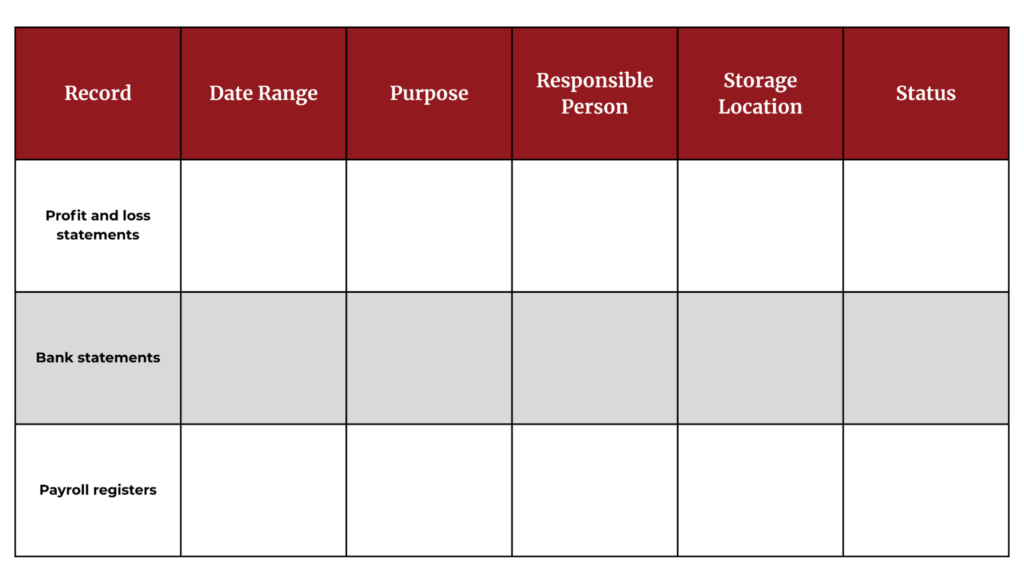
A hurricane loss file starts with the financial records that establish the business’s condition before the storm. Gather profit and loss statements, balance sheets, bank statements, merchant deposit records, sales reports, budgets, tax returns, payroll registers, asset records, inventory reports, contracts, open orders, accounts payable, and accounts receivable. Advanced CFO’s AP and AR cash flow guide explains how those payables and receivables records connect to the rest of the loss file.
Store everything in a secure cloud folder with a document index, consistent file names, an assigned owner for each category, and access controls that limit who can edit the originals. A table like the one below can help track what has been collected and what is still missing:
Separate Property Damage, Lost Income, and Extra Expenses
The accounting system should use separate classes, locations, projects, or ledger accounts for physical repairs, damaged inventory, replacement equipment, temporary premises, generators, cleanup labor, overtime, professional fees, and insurance reimbursements. Combining every storm-related transaction into one generic expense account makes it nearly impossible to reconstruct the loss later, since each category may be treated differently by an insurer, a lender, or the tax code. Keeping the categories separate from the first transaction forward organizes the evidence, though the accounting structure itself does not determine what an insurance policy actually covers.
Set up the storm-related classes or ledger accounts as soon as damage occurs rather than waiting until month-end close, since transactions coded correctly the first time save hours of reclassification later. Assign one person on the finance team to review new storm-related transactions each week and confirm they landed in the right category. A short written policy describing which costs belong in which account keeps the coding consistent even if more than one person is entering transactions during a busy recovery period.
Support Lost Income With a Defensible Baseline
Lost income claims depend on a credible estimate of what the business likely would have earned if the storm had not happened. Historical results, seasonality, budgets, confirmed orders, reservations, contracts, capacity, and current trends all help establish that baseline. Advanced CFO’s small business cash flow management guide covers the same kind of pre-storm forecasting that makes a lost-income baseline more credible to a reviewer.
Once the baseline exists, separately identify expenses that continued during the interruption, expenses the business avoided, and any added recovery costs. Avoid promising a particular claim value in this documentation, since the final number depends on policy language and reviewer judgment.
Track Insurance, SBA, and Tax Items Without Double Counting

Insurance proceeds, disaster loans, grants, repair costs, asset replacements, and possible tax items must remain separately identifiable throughout the recovery. An SBA loan is financing, not operating revenue, and treating it as revenue overstates the business’s recovery. Insurance reimbursement may also affect how a loss is measured or taxed, depending on the amount and timing of the payment. Advanced CFO’s tax services can help apply current guidance to casualty-loss documentation, and owners should get case-specific advice before recording a casualty deduction or finalizing a settlement figure.
Frequently Asked Questions About Hurricane Loss Records
What records should a business keep after hurricane damage?
Keep dated photos and videos, property and inventory lists, repair estimates, invoices, receipts, insurance correspondence, payroll records, bank statements, tax returns, asset registers, and pre-storm financial statements. Store copies in a secure cloud location and maintain a simple index so each amount can be traced to supporting evidence.
How do you calculate business income lost after a hurricane?
Start with the income the business likely would have earned during the interruption, supported by historical results, seasonality, budgets, contracts, bookings, and current trends. Then identify expenses that continued, expenses avoided, and extra recovery costs. Policy language controls insurance treatment, so involve the carrier and a qualified financial professional.
Can a business deduct hurricane losses on its taxes?
Some unreimbursed business casualty losses may qualify for federal tax treatment, but the result depends on the property, basis, reimbursements, disaster status, timing, and current law. Do not book a tax benefit from a rough estimate. Review IRS Publication 547 and the facts with a qualified tax advisor.
What is IRS Publication 584-B used for?
IRS Publication 584-B is a workbook designed to help businesses list damaged or stolen business property and organize information used to estimate a casualty, disaster, or theft loss. It is a documentation aid, not a guarantee that a loss is deductible or that an insurer will accept the amount.
Can SBA disaster loans cover lost business income?
SBA Economic Injury Disaster Loans can provide working capital for eligible businesses that cannot meet ordinary and necessary obligations because of a declared disaster. They are not a payment for lost profits. Eligibility, permitted uses, available amounts, and deadlines depend on the declaration and the business’s circumstances.

Make the Financial Record as Strong as the Recovery
Storm recovery creates enough uncertainty without making owners search for old statements and missing receipts. A disciplined loss file gives every reviewer the same dated evidence, keeps reimbursements separate, and helps management understand the true cash cost of the interruption.
Advanced CFO can organize the reporting foundation through cloud accounting packages, while payroll services from Accupay keep payroll data accessible during a closure. Contact Advanced CFO before hurricane season so the documentation system is ready before it has to prove a loss.